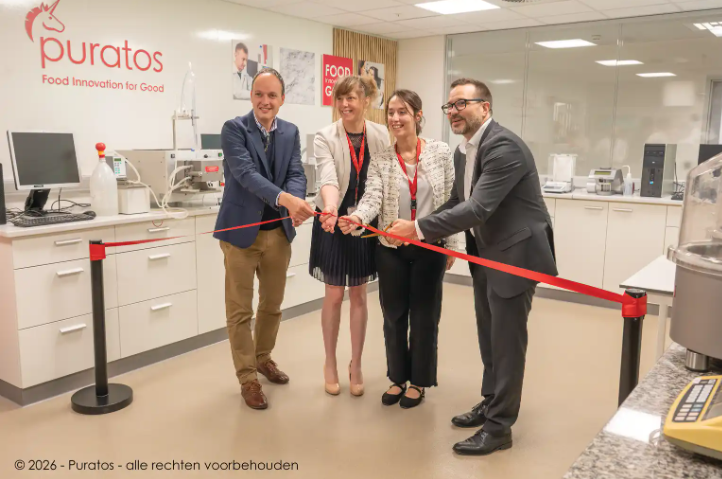

Puratos is convinced: ask a baker what the biggest production risk is, and few will answer: flour. Yet that is precisely the challenge today. As agriculture shifts towards gentler and regenerative farming practices, wheat quality is becoming less predictable. The effects can be felt all the way through to our bread. Since this summer, Puratos has been using its new research centre to turn that challenge into a driver for innovation.
Puratos starts from a simple conviction: companies that work closely with their partners, from field to plate, help build local and sustainable production chains. The Belgian group, specialised in ingredients for bakery, patisserie and chocolate, is putting this ambition into practice with its new Flour Competence Center. Entirely dedicated to flour analysis, this research centre will help gain a better understanding of variations in flour and support customers around the world in their applications.
Flour Competence Center
Why dedicate an entire research centre to flour, an ingredient that may seem simple at first glance? Because flour is anything but simple. Protein content, enzymatic activity, moisture levels and water absorption capacity can vary significantly from one harvest to another. Sometimes, these characteristics even change within a single season, influenced by climate change, evolving farming practices and global developments in the supply chain.
Puratos highlights one important driver behind this evolution: the transition to regenerative agriculture. Healthier soils and greater biodiversity are good news for the climate, but they also mean that flour is becoming less uniform than bakers have traditionally been used to.
“Flour is the foundation of most bakery recipes, yet it is also one of the most complex and variable raw materials in the industry.”
Paul Baisier, Chief R&D Officer at Puratos
A ‘glocal’ approach
The new centre is digitally connected to a global network of laboratories specialising in flour analysis. This “glocal” approach combines global data with local expertise, tailored to the specific harvest in each region. Advanced analyses and predictive models based on generative AI then translate this data into practical solutions that customers can apply immediately. In this way, AI helps them consistently produce high-quality fresh bread, frozen dough and bakery products with a longer shelf life.