

For most people, the story of a Coca-Cola glass bottle ends with the last sip. But behind the scenes, that is precisely where the most interesting part of its journey begins. Coca-Cola plays an active role in circular packaging. Its refillable glass bottles are designed to be refilled at least 25 times at the company's Belgian sites in Ghent, Antwerp and Chaudfontaine. At the same time, Coca-Cola continues to innovate with a lighter version of its refillable glass bottle.
A Coca-Cola bottle, reborn
Once empty bottles are returned through the deposit return system, they are automatically sorted. Bottles that are damaged are removed from the production line and recycled into new glass packaging. Those that are still in perfect condition are sent through an industrial washing process, where old labels are completely removed and the bottles are thoroughly cleaned inside and out.
Next comes a meticulous quality check. Cameras and sensors inspect every bottle for even the smallest defect. Only bottles that remain in perfect condition are refilled, sealed with a new crown cap and fitted with a fresh label. This allows the same glass bottle to be reused at least 25 times.
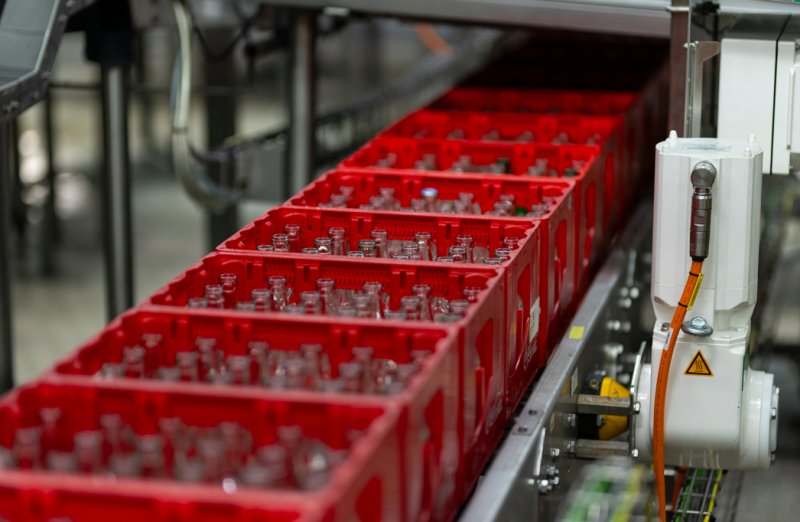
"Our glass bottles are designed to be cleaned and refilled at least 25 times. Of course, this is only possible if consumers return their empty bottles through the deposit system. That's why we launched a nationwide awareness campaign in Belgium under the slogan 'Together for Refillable’"
- Nicholas Courant, Director Public Affairs, Communication & Sustainability Belgium and Luxembourg at the Coca-Cola Company
140 grams lighter: sustainability starts with design
While recycling receives a great deal of attention today, reuse is just as important. At the same time, Coca-Cola continues to invest in innovation. Its Belgian R&D team in Anderlecht has developed a new one-litre glass bottle that is 140 grams lighter than its predecessor.
That may sound like a small change, but at scale it makes a real difference. A crate containing six bottles weighs almost one kilogram less, making it easier to handle for both employees and consumers while also reducing the weight transported by trucks.
So, the next time you place an empty glass bottle back in its crate, there's a good chance its story is far from over. In fact, just a few weeks later, it may already be back on a store shelf, refilled and ready to begin its next chapter.