

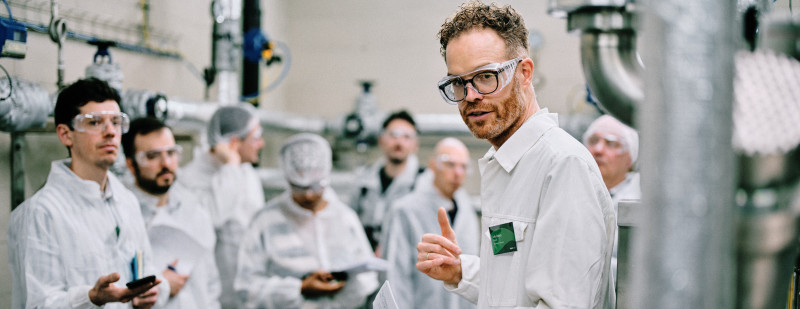
What’s for dinner tomorrow? At Cargill Vilvoorde, the R&D team explores this question every day in their food innovation lab. They analyze emerging food trends and translate them into future-proof ingredients for the food industry. This work reflects Cargill’s commitment to strengthening sustainable supply chains by enhancing global resilience and supporting local economies.
Future-proof through next-generation raw materials
Looking for a taste of tomorrow’s food? In Vilvoorde, Cargill’s teams are shaping the future by turning emerging food trends into next‑generation ingredients for the food industry. Experimentation and state-of-the-art technologies drive this initiative. From corn‑fermented sweeteners to hybrid chicken nuggets enriched with vegetable proteins through precision fermentation — and even chocolate alternatives.
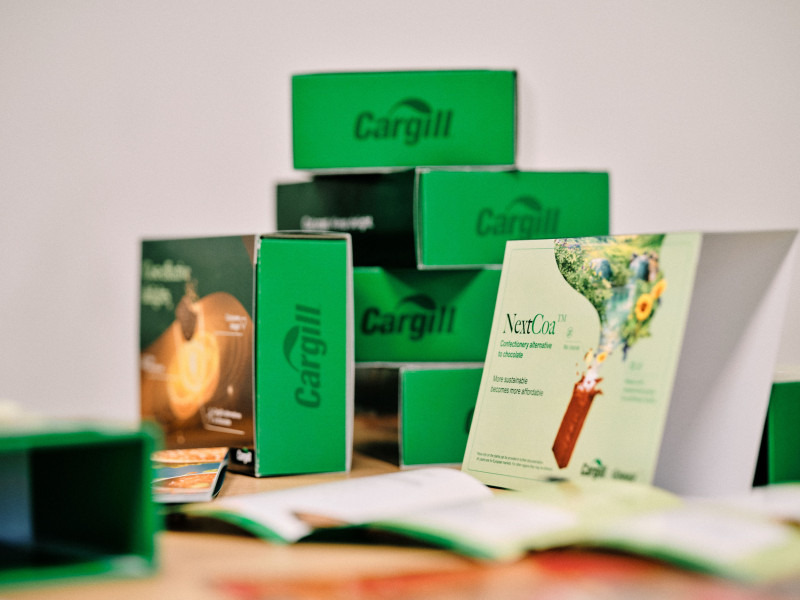
A key example is NextCoa, derived from roasted sunflower and grape seeds and already finding its way into products like biscuits, where it can partially or fully replace cocoa. In the face of volatile cocoa prices, this provides both economic benefits and a more sustainable alternative.
Belgium: a strategic hub for research and development
With a €45 million investment, Cargill is expanding and modernising its European innovation lab in Vilvoorde, growing the site by 37%. As part of Cargill’s global network of innovation centres, the site plays a key role in developing new products tailored to the European market. Belgium was a strategic choice, offering a central location, a strong talent pool, and a favorable R&D tax framework.
“Eighty percent of our customers’ headquarters are located within a 300-kilometre radius,” says Geert Maesmans, who leads Cargill’s food research activities across Europe, Africa and the Middle East. “These include retailers, but primarily food manufacturers. In addition, the nearby universities ensure a steady pipeline of highly skilled talent.” Around 200 people work at the lab, ranging from market researchers to patent specialists.