

By 2030, the Belgian food industry aims to reduce its CO₂ emissions by 40%. Brewery Huyghe in Melle turns these ambitions into tangible, drinkable initiatives. Together with malting group Boortmalt, the brewery is now the first in Belgium to brew beer with CO₂-negative malt.
Regenerative agriculture
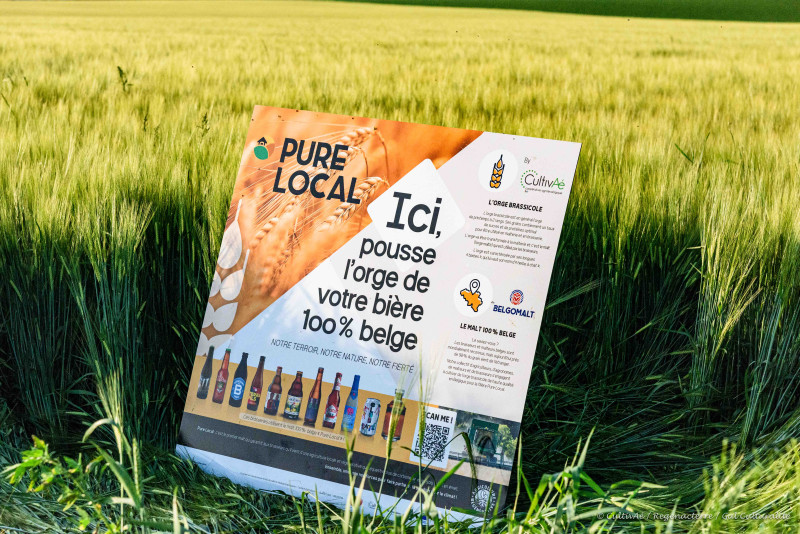
The key ingredient in every beer? Malt. The malt for Delirium Tremens and Delirio is sourced through Boortmalt’s Pure Local project, developed together with the farming cooperative Cultivaé. Thanks to the local cultivation of malting barley using regenerative farming techniques, emissions are not only avoided, but CO₂ is actually captured in the soil. In 2024, 120 Belgian farmers collectively stored an average of 37 kg of CO₂ in the soil for every harvested ton of barley. An impressive figure demonstrating how agriculture can be part of the solution.
Residual heat
Also the malting process is climate-neutral. Boortmalt’s Antwerp site channels residual heat from waste processor Indaver via a pipeline. As a result, natural gas combustion on site is unnecessary. And transport to Melle? That is done with an electric truck, another step towards a low-carbon supply chain.
Climate-neutral production
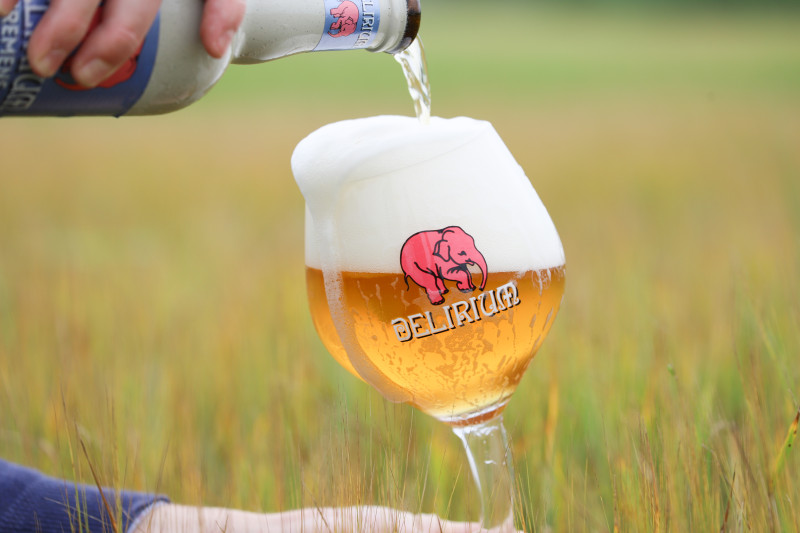
Ever since 2011, Brewery Huyghe has invested in energy efficiency and water savings. “In the first phases, we optimized our own production and energy supply,” states CEO Alain De Laet. “Now we are taking the next step: achieving a negative CO₂ balance across the value chain. Our goal is to produce in a climate-neutral way by 2035.” Note that “the taste and quality of the beer remain intact,” De Laet explains. “The difference lies only in the fact that it’s achieved with a smaller ecological footprint.”